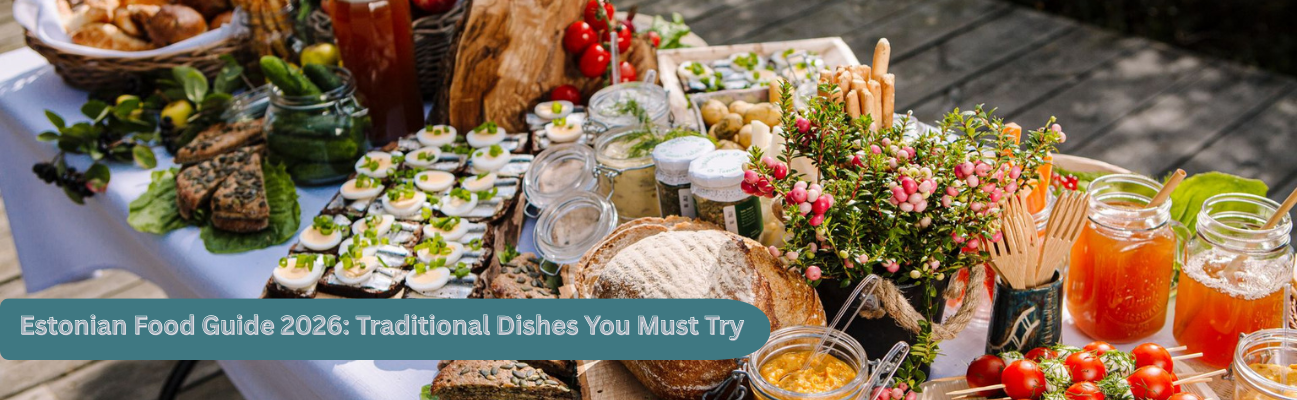
Estonia is known for its beautiful medieval architecture, has significant digital development, and the lifestyle there is quite Nordic-oriented. Nevertheless, it is also a country with an amazing culinary scene. In fact, the Estonian food guide contains cuisines with Scandinavian, German, and Russian elements. On the other hand, this type of cuisine is characterized by strong and distinct tastes, the use of freshly picked seasonal agricultural products, and the authentic concept of farm-to-table.
Planning a traditional Baltic food escape this year? This Estonian Food Guide 2026 is your key to discovering the country’s culinary treasures, from classic dishes to local beverages and sweet treats, along with the best places to sample them. No matter the reason for your visit—be it for pleasure, work, or cultural immersion—experiencing the Estonian food guide is a must, as it delivers the country and takes you on a journey of trying out the traditional dishes in places such as Tallinn and Tartu with your Estonia Schengen visa from UK.
The Estonian food guide is a reflection of several key elements like nature, tradition, and modern Nordic trends.
Here are the key characteristics of the Estonian food guide, some of which are mentioned below:
The nation’s rich forests, extensive coastline, and agricultural lands heavily shape its traditional dishes. In 2026, the country is still focused on using environmentally friendly, homegrown produce, which will undoubtedly put it on the map as a culinary gem of Northern Europe.
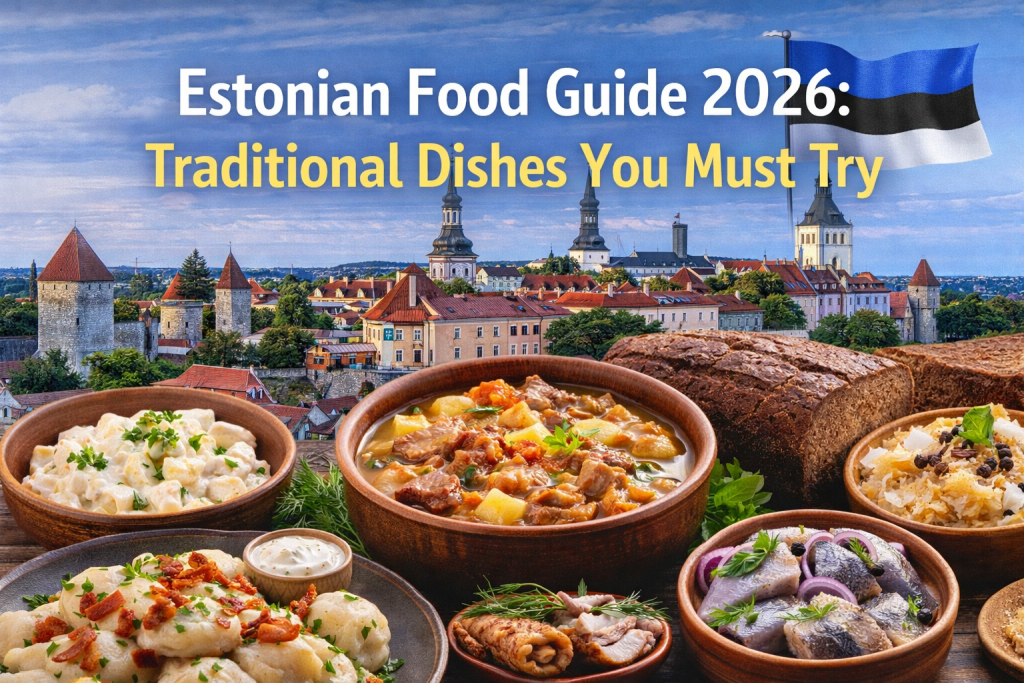
Estonian cuisine is characterized by its reliance on seasonally sourced ingredients such as root vegetables, pork, rye bread, fish, and dairy, and more, from Estonian seafood to desserts and more. Below are some of the traditional Estonian dishes you shouldn’t miss in 2026.
Blood sausage is very close to the heart of an Estonian food guide, and it is mainly associated with Christmas. Crafted from pork, barley, and, yes, blood, it’s usually accompanied by:
The tangy sweetness of the lingonberry offers a lovely contrast to the sausage’s richness. If sausage blood is not the type of food you normally enjoy, these kinds of dishes, this authentic Estonian food guide, can actually open up your taste buds with the intensity of their flavors and their very local properties.
Mulgipuder, originally from the Mulgimaa area, is a very rich combination of flavors. It consists of the following:
This is a traditional dish and probably the best example of farm life in Estonia: it’s simple yet very substantial, and it even has a rustic feel to it.
Kama is a special kind of dish to add to your Estonian food guide, as it is made of roasted barley, rye, oat, and pea flours. It is usually combined with:
It’s quite common to sweeten kama with sugar or berries, and it is, in fact, a traditional superfood that is very healthy. By the year 2026, a lot of trendy cafes will be coming up with breakout kama in the form of desserts, smoothies, and even ice creams.
Rosolje is one of the most eye-catching dishes with a beetroot base that you often see during festivities.
It consists of:
That refreshing salad is all about the flavors of preserved vegetables and one of the traditional Baltic foods in Estonia.
Kiluvileib, which is the shortened form of Kilusai or Kiluvileib, is what we call a sprat sandwich in English. To start the day off or just to have a snack, this open-faced sandwich is widely enjoyed by locals who love:
This is recommended in any Estonian food guide as being simple, salty, and deeply traditional, thereby making this one of the easiest ways to taste authentic Estonian cuisine.
Süld is Estonia’s version of meat jelly or aspic. Made by slow-cooking pork until gelatin-rich broth sets into a jelly, it’s served cold with mustard or horseradish.
While it may look unusual to first-time visitors, it’s a classic example of a traditional Estonian food guide with Baltic preservation techniques.
Pirukad are small pastries made from baked or fried dough. The fillings include:
As a street food, these pastries can be found almost everywhere in bakeries throughout Estonia.
Being on the Baltic Sea, seafood here is some of the best, making it a perfect addition to this Estonian food guide.
In the coastal towns and cities such as Tallinn and Pärnu, seafood is always fresh, seasonal, and well-prepared.
Estonian sweets are basic but comforting and play an important role as a perfect addition to the Estonian food guide.
A dessert bun filled with whipped cream, which is a treat for Shrove Tuesday.
A sweet snack made of curd and covered with chocolate that is a favorite of both kids and grown-ups.
A holiday treat that is a braided sweet bread.
In Estonia, rye bread still represents more than just food; it is a piece of culture. It is dark and dense and has a sour taste that goes well with almost every dish.
Vana Tallinn is a well-known Estonian liqueur with a blend of rum and spices. Besides taking it neat, it is also a nice addition to coffee and cocktails
A fermented bread beverage to kvass.
Estonia’s craft beer industry is flourishing in 2026, particularly in Tartu.
Prepared from indigenous forest berries such as blackcurrant and blueberry.
In 2026, Estonian food culture brings heritage with innovation.
Restaurants in Tallinn’s Old Town mix medieval settings with modern decor, thereby providing visitors with a sophisticated Baltic dining experience.
Must Read: Is Tallinn Worth Visiting?
Even though one can try classic meals all over the country, these are the main places to enjoy the local cuisine when following the Estonian food guide:
Visiting local markets reveals to you the Estonian seasonal production and homemade specialties.
Even though traditional meals are centered on meat and fish, the present-day Estonian food guide serves:
Tallinn and Tartu boast a number of vegetarian-friendly establishments that are giving new life to traditional Estonian flavors.
Dining is relaxed and often family-oriented.
Despite its small size, Estonia’s food culture is quite packed and genuine, with a deep connection to the past. Things like black pudding and potato porridge on the savory side, or the dessert-oriented kama and kringel—each dish is a manifestation of the Baltic story.
The best thing you can do when planning your 2026 trip is to include culinary travel in your schedule. Be sure to try all the rye breads, drink some really good local liquors, and enjoy your fish that is so fresh to the market, and of course, get a feeling of Estonia outside its beautiful old streets. Experiencing a traditional Estonian meal is a must on any trip to Estonia, as it is a perfect combination of the region’s history, nature, and taste and don’t forget to carry your Estonia Schengen visa from UK along with you!
There are some of the top cultural foods to try, like verivorst (blood sausage), which is one of the most famous and traditional Estonian dishes, especially during Christmas. Other dishes include Mulgikapsad (sauerkraut with pork and barley), Leib (dark rye bread), Kiluvoileib (sprat sandwich), and Sult (meat jelly).
Vana Tallinn (Old Tallinn), a rum-based liqueur, is the best-known alcoholic beverage and a local favorite. It is famous for its dark brown color and distinctive taste, with a velvety texture and is flavored by hints of citrus, cinnamon, and vanilla.
Breakfast in Estonia usually consists of rye bread, sprat sandwiches, cheese, cold meat, coffee, and is sometimes eaten together as a sandwich. It has been seen that some Estonians also eat porridge made from groats and potatoes.
Estonian food is vegetarian, especially in Tallinn, where dedicated vegan restaurants such as Vegan Restoran V and cafes thrive. Traditional cuisine is meat-heavy, but modern restaurants in Tallinn and Tartu offer vegetarian and vegan adaptations.
There are many reasons for food to be expensive in Estonia, which is likely due to our consumption habits, geographic location, and Estonia’s very high VAT.
ESTONIA VISA experts has the easiest process to provide the Estonia visa with easy process.
Here is the process in just 4 simple steps:
– Fill out the Estonia visa application form online and pay the handling charges.
– Our experts will book the appointment at the visa centre.
– Visit the visa centre for document verification and for biometrics
– Receive your visa via post along with your passport.

 02084326004
 447300463745
 info@estoniavisa.co.uk