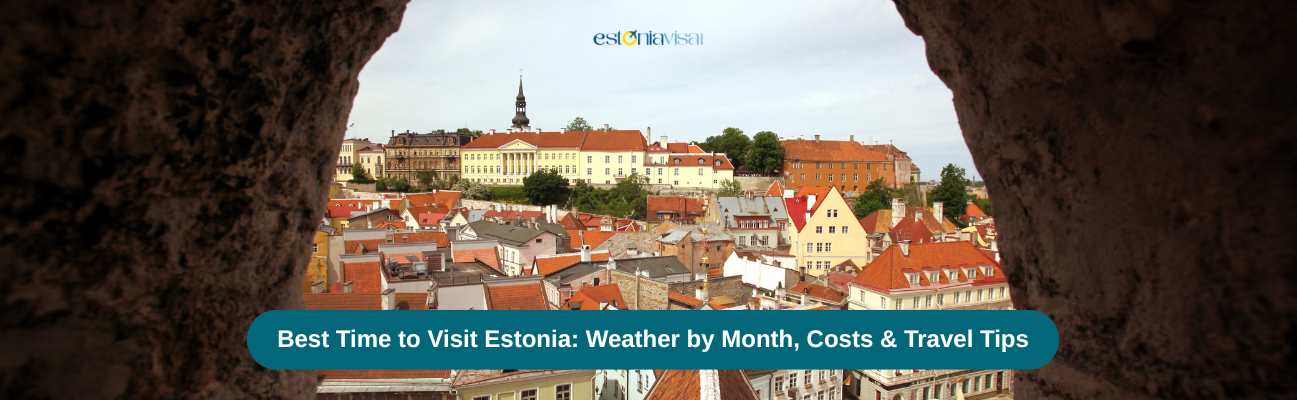
The best time to visit Estonia is not a simple answer, and that is exactly what makes the question worth asking properly.
Estonia’s seasons are not gradual shifts in temperature — they are near-complete transformations. On one hand, the country boasts the deep winter season, which settles snow across Tallinn’s limestone towers. Then, there is the late June, which stretches daylight past midnight. After that, the Autumn season turns the national parks copper before December arrives, with mulled wine and medieval market stalls.
Every season carries a different character, a different price point, and a different version of the country. This guide works through every month so you can decide, with confidence, which Estonia you actually want to visit with an Estonia Schengen Visa from UK.
| Season | Months | Character | Avg. Temp | Best For | Standout Reason to Visit |
| Deep Winter | Jan–Feb | Quiet, freezing, heavy snow-covered | -3°C to -8°C | Budget travellers, winter solitude seekers | Lowest hotel rates of the year; rare Northern Lights viewings during high solar activity. |
| Early Spring | Mar–Apr | Thawing, rapidly growing daylight, uncrowded | 1°C to 10°C | Adventure seekers, value-focused travellers | Experience Soomaa National Park’s unique “Fifth Season” flooded forest canoe tracking. |
| Late Spring | May–Jun | Bright, lively, fully accessible | 12°C to 20°C | City break visitors, outdoor explorers | “White Nights” begin with 19+ hours of daylight; long evenings without peak-season crowds. |
| Peak Summer | Jul–Aug | Warm, festive, peak crowds | 18°C to 22°C | Festival-goers, Baltic island hoppers | Near-endless daylight; smooth, high-frequency ferry access to Saaremaa and Hiiumaa islands. |
| Autumn | Sep–Oct | Calm, golden, unhurried | 8°C to 15°C | Nature photographers, slow travellers | Vibrant fall foliage (kaamos prelude) across Lahemaa National Park; lower prices than summer. |
| Quiet Winter | Nov | Subdued, peaceful, dark | 0°C to -3°C | Ultra-budget travellers, museum hoppers | Deepest accommodation discounts of the entire year; intimate indoor cultural events. |
| Festive Season | Dec | Atmospheric, cold, fairytale aesthetic | -1°C to -5°C | Christmas lovers, winter city visitors | Tallinn Christmas Market operating in a UNESCO-listed medieval square. |
Estonia boasts a northern Baltic climate while also having strong seasonal contrasts.
When it comes to the seasons, summers are mild with very long daylight hours. On the other hand, winters are typically cold, dark as well as frequently snowy.
So, for many travelers, understanding these seasonal differences is the key to deciding the best time to visit Estonia!
*We will confirm you through email when the appointment will be fixed.
January is typically the coldest month in Tallinn. That is because, the temperatures usually range between -3°C and -8°C. In fact, you will get to see snowfall common across much of the country, especially inland. In addition to this, the coastal winds can make temperatures feel colder near the Baltic Sea.
As for the daylight, it is limited to around six or seven hours, so winter trips are usually slower-paced and focused more on cafés, museums, saunas, and festive scenery rather than long sightseeing days.
This period is also one of the quieter and more affordable seasons for the travellers who usually search for the cheapest time to visit Estonia.
March and April are transitional months with rapidly increasing daylight and lower visitor numbers. Snow can still appear in March, but temperatures gradually become more comfortable by late spring.
May and June are widely considered the best times to visit Estonia for first-time visitors. Temperatures are pleasant, hotel prices are generally lower than peak summer, and daylight stretches late into the evening during the White Nights Estonia period.
Although Tallinn does not experience a true midnight sun, twilight remains visible close to midnight around the summer solstice.
The month of July is usually the warmest month in Estonia. In fact, you will find the daytime temperatures averaging around 20°C to 22°C in the Tallinn. This is also the busiest tourism season, especially in Tallinn, Pärnu, Saaremaa, and Hiiumaa.
Summer is the best period for:
Accommodation and ferry prices are usually highest during July and early August.
September is one of the most underrated months for visiting Estonia. The weather remains relatively comfortable. In addition to this, the autumn colours begin appearing across national parks, and visitor numbers drop after the peak season of Summer.
Then, there is the month of November which becomes darker and quieter. On the other hand, December transforms Tallinn with the Tallinn Christmas Market in Raekoja plats. Snowfall is common during winter, although conditions vary each year.
Did you know? In late June, Tallinn receives close to 17 to 19 hours of daylight around the summer solstice, one of the longest photoperiods of any European capital.
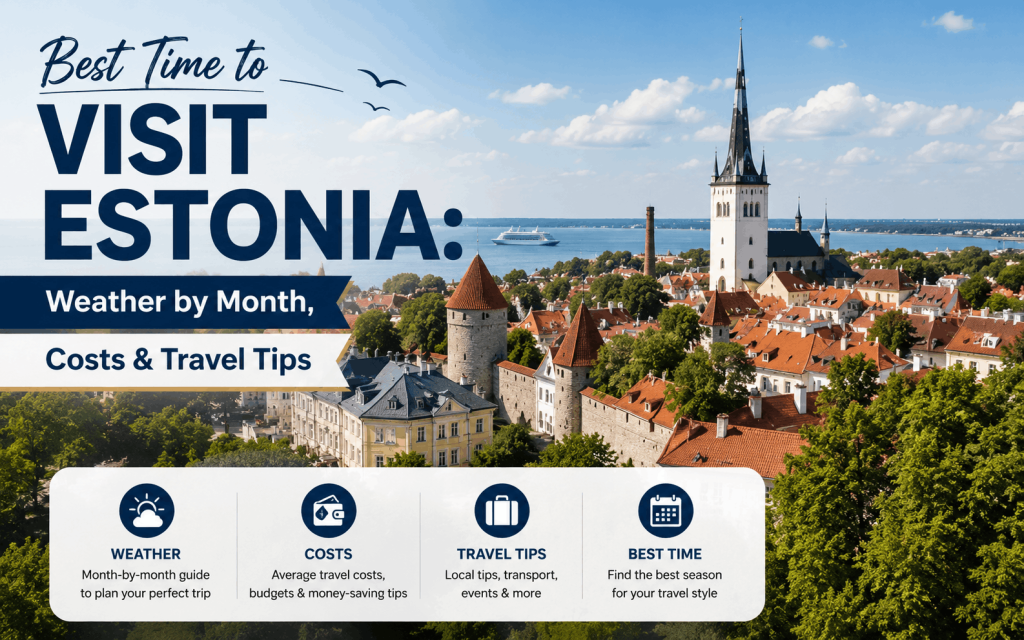
The capital city of Estonia, Tallinn changes noticeably between the seasons. Therefore, the timing of your trip has a major impact on the holiday experience.
To put it simply, the summer season brings crowded terraces and long daylight hours. While the winter season creates a quieter atmosphere with snow-covered medieval streets and Christmas markets.
For most of the travellers, May and June are the best times to go to Tallinn. Temperatures are comfortable for walking, daylight lasts late into the evening, and the city feels lively without the heavy crowds of peak summer.
This period works especially well for:
Hotel prices also tend to remain more reasonable than in July and August.
July is Tallinn’s busiest tourism month. Areas around Viru tänav, Town Hall Square, and the harbour become significantly more crowded, particularly when cruise ships arrive during the day.
Travelers visiting in summer should:
Many repeat visitors prefer Kalamaja for its quieter atmosphere, lower accommodation costs, and easy access to Telliskivi Creative City. It is also a strong option for a relaxed Tallinn weekend break.
Winter completely changes Tallinn’s atmosphere. The Tallinn Christmas Market, held in Raekoja plats from late November into early January, becomes the centrepiece of the city during December.
Winter visitors should expect:
However, this season also offers some of the most atmospheric views of the UNESCO Old Town Tallinn, particularly during snowy mornings and quieter evenings. So, what is holding you back from visiting Estonia? Choose the right time as per your travel needs and grab the Estonia visa from London for a memorable holiday in the country!
In case you didn’t know: Tallinn’s Old Town was inscribed as a UNESCO World Heritage Site in 1997, recognized for being one of the best-preserved medieval trading cities in Northern Europe, according to UNESCO.
The summer season in Estonia usually boasts long daylight hours along with the busy outdoor cafés, coastal travel, and the most active festival season of the country.
From mid-June through late July, the twilight lingers close to midnight during the White Nights Estonia period, creating unusually long evenings across Tallinn and the Baltic coast.
In late June, sunset in Tallinn happens well after 22:00, while sunrise begins again shortly after 04:00. Although Estonia does not experience a true midnight sun, the extended twilight makes evenings feel significantly longer than in most of Europe.
Many travellers are surprised by how difficult it can be to adjust to the constant brightness during summer. Packing an eye mask is useful, especially when staying in older guesthouses or apartments in Tallinn’s Old Town where blackout curtains are not always guaranteed.
Summer is also the best season for exploring Estonia’s western Baltic islands, particularly Saaremaa and Hiiumaa. Ferries operate regularly from mainland ports, although vehicle spaces can sell out quickly on summer weekends.
Lahemaa National Park, located around 70km east of Tallinn, is one of the easiest nature day trips from the capital. Visitors typically come for:
The month of July is usually the busiest tourism month in Estonia due to festivals, school holidays as well as the warmer weather. Accommodation prices in the Tallinn and popular coastal areas often rise sharply during this period.
For travellers who focus on lower costs along with lighter crowds, mid-June is often a better balance than late July. It still offers the full White Nights Estonia experience while avoiding the busiest peak-season weekends.
Interesting fact : Lahemaa National Park, established in 1971, was the first national park created in the former Soviet Union.
Must Read, Best Beaches in Estonia for Summer Travel 2026
Yes, the winter season in Estonia is worth visiting if you are prepared for the short daylight hours, freezing temperatures, as well as the slower-paced travel. Please note that, the winter season completely changes the atmosphere of Tallinn, especially between the months of December and February when snow becomes more common.
Winter temperatures in Tallinn often range between -3°C and -8°C. However, the colder periods can occur during the months of January and February. Apart from this, the daylight is limited, with darker mornings and sunsets arriving early in the afternoon.
Travelers visiting during winter should prepare for:
The upside is that winter also brings:
The Tallinn Christmas Market, held annually in Raekoja plats, is the main seasonal attraction and usually operates from late November into early January.
The Northern Lights in Estonia are possible during winter, although sightings are far less predictable than in northern Scandinavia or Lapland.
February and March generally offer the best conditions because:
For the best chance of seeing the lights, travellers usually head away from Tallinn toward darker coastal regions or islands with lower light pollution.
Winter is also the best season to experience Estonia’s traditional sauna culture. Public saunas remain common in Tallinn, while rural regions in southern Estonia are known for historic smoke sauna traditions recognised by UNESCO.
For many visitors, combining a hot sauna with freezing outdoor temperatures becomes one of the most memorable parts of a winter trip.
Get this: Estonia’s Võromaa smoke sauna tradition was added to UNESCO’s Intangible Cultural Heritage list in 2014 for preserving traditional community rituals and customs.
The cheapest time to go to Estonia is during the quieter shoulder-season months. These are usually outside the summer and Christmas travel periods. The months of March, April as well as the mid-November often offer the lowest prices for flights and accommodation. This is quite true, when you compare the prices to peak season months in Estonia, i.e. July, August, and December.
The months of March and April are among the most affordable for going and seeing Estonia. In addition to this, the flight prices from London to Tallinn are often significantly lower during this period. On the other hand, hotel availability improves compared to peak summer weekends.
Then, there is the month of October ( Autumn ) which can offer good value after the busy summer season ends. This is quite ideal for those type of travellers who are interested in quieter city breaks and autumn scenery.
The first half of November is typically one of the quietest tourism periods of the year. This is due to the short daylight hours as well as the colder weather. Such conditions reduce visitor numbers, which often leads to lower accommodation prices across Tallinn.
This period works best for travelers who prioritize:
Travellers looking to reduce costs should consider:
Neighbourhoods like Kalamaja often provide better value than central medieval hotels while still remaining within walking distance of major attractions.
Estonia also uses the Euro (€), and card payments are widely accepted throughout the country. Now, all you need is an Estonia tourist visa from UK to get started!
Interesting fact: Tallinn was one of the European Capitals of Culture in 2011. This is the time, when the capital city hosted hundreds of cultural events as well as the international performances throughout the year, according to the European Commission Press Release.
For most first-time visitors, May and June represent the absolute strongest combination of comfortable weather, reasonable costs, and near-endless daylight hours without the dense crowds of mid-summer. This makes the late spring window the best time to visit Estonia for a balanced, highly rewarding trip.
However, the definitive “right” answer depends entirely on what you want out of your Baltic itinerary:
| Your Travel Goal | Best Month | Why This Month Wins |
| Northern Lights | February–March | Crisp, clear winter skies away from light pollution in coastal hubs like Võsu. |
| Christmas Atmosphere | December | Experience the iconic Tallinn Christmas Market in Town Hall Square under fresh snow. |
| Festivals & Nightlife | July | Peak energy, outdoor terraces open 24/7, and events like the Viljandi Folk Music Festival. |
| Budget Travel | March or November | Deepest accommodation discounts and lowest low-cost carrier flight rates of the year. |
| Warmest Weather | July–August | Perfect swimming and island-hopping conditions on the beaches of Pärnu and Saaremaa. |
| Best All-Round First Visit | May or June | The magical “White Nights” (Valged Ööd) phenomenon paired with moderate prices. |
September deserves a special mention outside of the standard calendar. Temperatures remain warm enough for comfortable outdoor exploration, vibrant copper autumn colours settle across Lahemaa National Park, and global visitor numbers drop off a cliff after August.
For food lovers, it is also peak foraging season for wild mushrooms and berries. Travellers who choose September often describe it as the most peaceful, authentic, and criminally underrated month to experience the country.
The incredible Estonia stands out as one of the most streamlined and tech-forward European destinations that you can go to see and explore.
However, confirming a few specific border regulations as well as the transit logistics before booking will ensure a completely hassle-free trip.
Estonia is a member of the Schengen Area. Under the current short-stay rules, UK residents with the visa-required passports need to get an Estonia Schengen Visa UK. This will allow them to enjoy tourist stays of up to 90 days within any rolling 180-day window. On the other hand, British citizens can travel to the Estonia visa-free!
Note that the EU has fully deployed its digital Entry/Exit System (EES), which replaces the traditional passport ink stamps with an automated biometric scan (facial images and fingerprints) at border checkpoints like Tallinn Airport.
Furthermore, travellers should prepare for the upcoming ETIAS travel authorisation, which will become a mandatory pre-travel requirement for all visa-exempt nationalities entering Estonia.
Pro-Tip : Always check the UK Government Foreign Travel Advice for Estonia while planning your trip. This will help you to know about any specific border protocols that you should adhere to.
Direct non-stop flights from London to the Tallinn Airport (TLL) take approximately 2 hours and 45 minutes. Direct flight options are seasonal but highly consistent via budget and regional carriers :
A 3-to-4-night itinerary is the perfect length for a standard Estonia city break. Tallinn’s historic Old Town is completely pedestrianised and easily walkable, though you should pack durable footwear for the steep, uneven medieval cobblestones.
For exploring beyond the capital, hiring a car is best for accessing the remote trails of Lahemaa National Park. On the other hand, booking mainland passenger ferries connects you to the western islands of Saaremaa and Hiiumaa.
Must Read, Is Tallinn Worth Visiting? Travel Tips & Guide
Estonia utilises the Euro (€). Also, Estonia is one of the most digitally advanced societies in the world.
So, card payments and mobile contactless options are accepted universally—from high-end restaurants in Tallinn down to remote wilderness parking meters. Carrying physical cash is rarely necessary.
Language barriers are practically non-existent for tourists, as English is fluently and widely spoken across the hospitality, retail, and public transit sectors.
Important Safety Law: If you are visiting during the darker autumn or winter months, Estonian law mandates that all pedestrians wear a small safety reflector (helkur) pinned to their outerwear or bags when walking outside in low-visibility conditions. You can pick these up for a couple of Euros at any local supermarket or souvenir shop.
Did you know? The Old Town of Tallinn sits on a limestone plateau called the Toompea Hill. In fact, this is a geological feature that has shaped the layout and defensive architecture of the city for over 800 years.
The best time to visit Estonia is the month that fits what you are genuinely after.
Summer offers near-endless daylight and a city that stays open long into the evening. Winter delivers frosted medieval streets and the most atmospheric Christmas market in the Baltic region. Spring and autumn give you the same destination at a fraction of the peak-season cost.
Excited to travel to Estonia but bothered by the lack of Estonia visa appointment from UK slots? Concerned that if you wait any longer, you may have to cancel the travel plans?
Instead of doing that, apply through a professional partner like ESTONIA VISA. We are a trusted visa agency in the UK helping travellers like you get fast-track appointments which enable you to speed up the visa process and get it quickly!
No matter when you visit, Estonia stands out for its combination of medieval cities, Baltic coastline, forest landscapes, and strong seasonal character.
So, grab the visa and head over to the fascinating Estonia for a delightful holiday experience!
“Late June in Tallinn was magical! The White Nights were unreal — daylight past 10 PM! Less crowded than July and much more affordable. Absolutely loved it!” – Sarah
“Tallinn in December felt like a fairytale! The Christmas Market, snowy cobblestones, and cosy saunas made it unforgettable. Cold but totally worth it!” – Daniel
For most of the travelers, the months May as well as June offer the best balance of pleasant weather, long daylight hours along with the moderate visitor numbers.
May, June, and December are usually the most popular times to go to Tallinn and see it. During the summer season, you will have longer days to enjoy sightseeing and outdoor cafés. On the other hand, December is known for the Tallinn Christmas Market along with the magical winter atmosphere.
Yes. The snowfall is common between the months of December and February, especially inland and during the colder winter periods.
The winter temperatures in Tallinn often range between -3°C and -8°C. In addition to this, the colder conditions are possible during January and February.
Yes, although sightings are not guaranteed. February and March usually provide the best conditions away from major urban light pollution.
Yes — especially for travelers interested in Christmas markets, winter scenery, saunas, and quieter city breaks.
The months of march, April, and mid-November are often the most affordable periods for flights as well as the accommodations.
The direct flights to Estonia from London usually take around 2 hours and 45 minutes depending on the airline as well as the airport.
Yes. Tallinn is highly walkable, buses are reliable between cities, and ferries connect the mainland with Estonia’s larger islands.
Estonia combines a well-preserved medieval capital, Baltic islands, forests, saunas, and strong seasonal contrasts while remaining less crowded than many Western European destinations.

 02084326004
 447300463745
 info@estoniavisa.co.uk